What Is a Modular Sofa? Configurations, Sizes & Who They Suit
Written by The Ezzo Team on 23rd Jun 2026.
A modular sofa is a sofa you build from separate parts. Instead of one fixed shape, you connect single seats, corner pieces, and ottomans into the layout your room needs. Then, when the room changes, you change the sofa. That flexibility is why modular and sectional seating is one of the biggest furniture trends of 2026.
We sell modular and corner sofas across several shapes, so this guide explains what modular really means, how the units combine, what sizes to expect, and who a modular sofa actually suits.
In short: A modular sofa is built from separate sections that connect, so you can arrange it as a straight run, an L, or a U and rearrange it later. Allow about 90cm to 100cm of depth per seat. It suits renters, growing families, awkward rooms, and anyone who moves house often. A fixed sofa is cheaper and feels more solid, but you are stuck with one shape.
Key takeaways
- Modular means separate sections that connect, so the shape can change later.
- Units combine into a straight run, an L, a U, or a corner around the room.
- Allow 90cm to 100cm of depth per seat and an 80cm legroom gap in front.
- It suits renters, growing families, movers, and awkward or open-plan rooms.
- A fixed sofa costs less and feels more solid, but locks you into one shape.
- Look for connector brackets so the sections stay locked together in use.
What is a modular sofa?
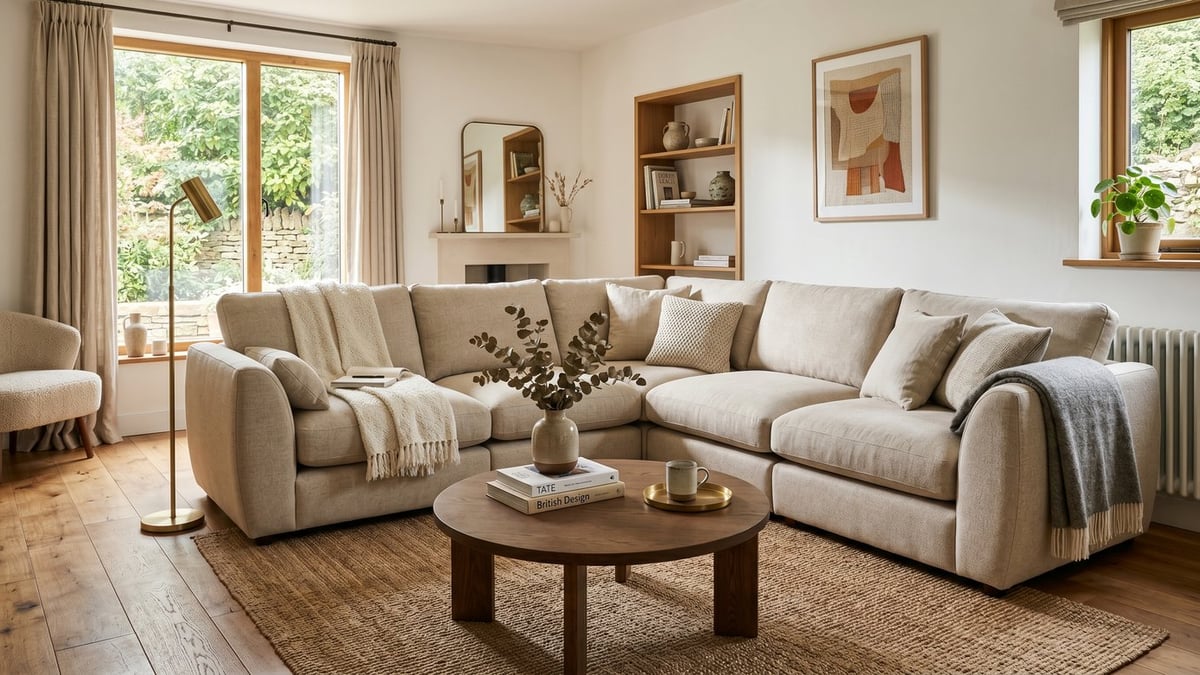
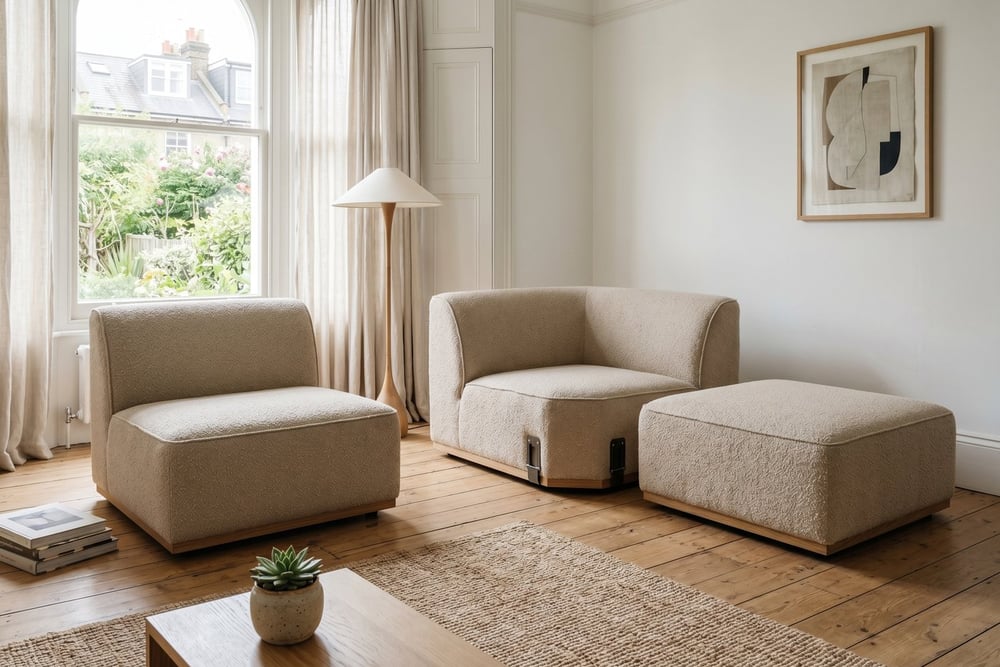
A modular sofa is made from separate sections that connect together. Each section is a single seat, a corner piece, an armless middle, or an ottoman, and you join them into the shape you want.
The opposite is a fixed sofa, which arrives as one welded shape you cannot alter. A modular sofa gives you the parts and lets you decide. Some ranges let you buy the sections one at a time and add to them over the years. A sectional is the same idea sold as one large multi-piece set. Either way, the point is that you shape the seating to the room instead of forcing the room to fit a sofa.
How do the units combine?
The units combine around a central corner or along a wall. You start with where people look, usually the television or the window, and build the seating to face it.
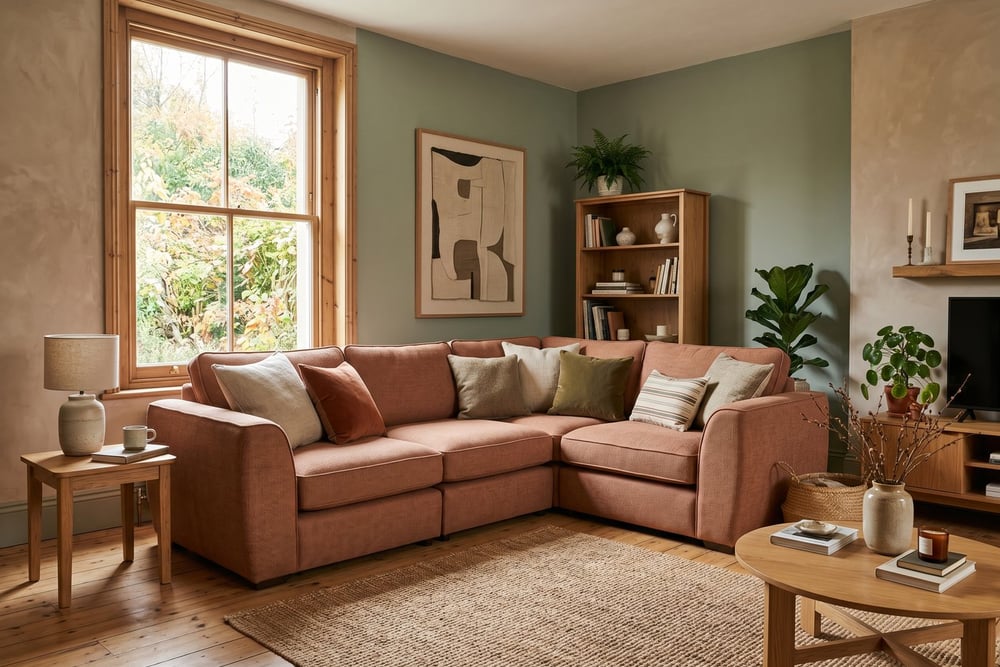
A straight run lines the sections along one wall for a classic sofa shape. An L-shape adds a corner piece and a return, which tucks neatly into most rooms. A U-shape puts a return on both ends for a big family layout. A chaise or ottoman on the end turns any of these into a lounging shape. Read our guide to planning and configuring a modular sofa for the full step-by-step.
What sizes do modular sofas come in?
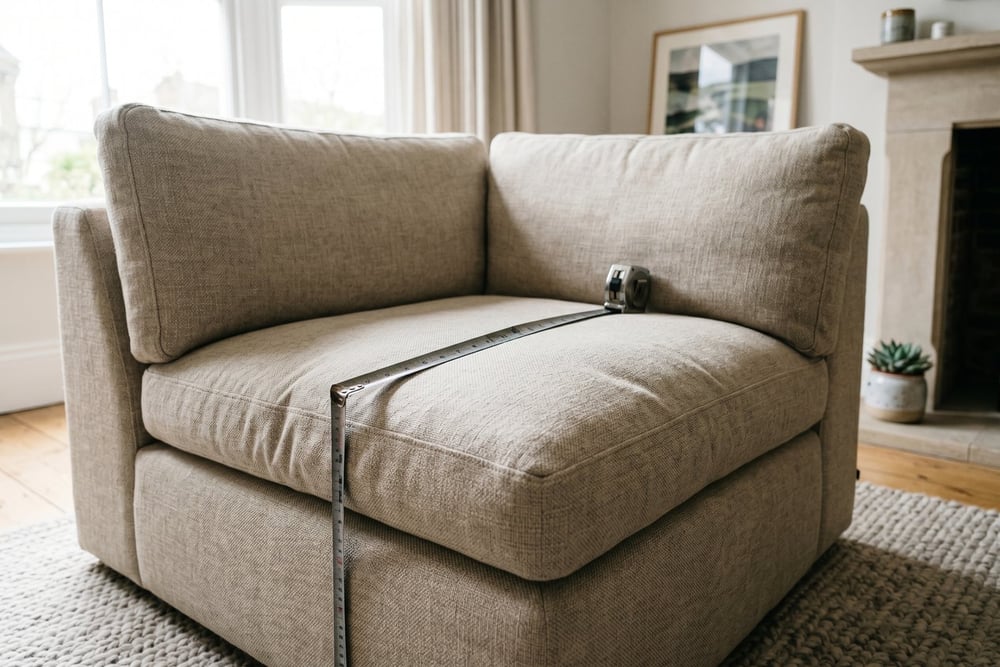
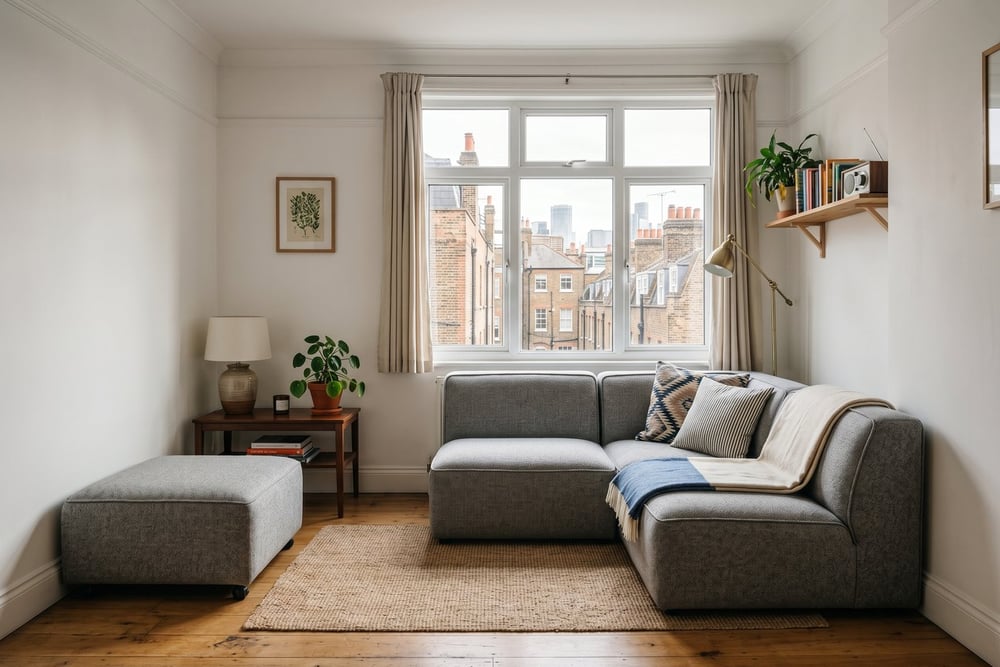
Modular sofas are sized by the section, not by a fixed length. A single seat is roughly 90cm wide. A corner piece is about 90cm square. Depth runs 90cm to 100cm per seat.
That means you can build almost any overall size from the same parts. A two-seat run plus an ottoman suits a small room. Three seats plus a corner makes a family L. Add another return and you have a U for a large space. Because depth is generous, always leave about 80cm of clear legroom in front. And measure your doorways before you buy, because the largest single section still has to come through the door.
| Section | Rough size | What it does |
|---|---|---|
| Single seat | About 90cm wide | Adds one place; the building block of the sofa |
| Corner piece | About 90cm square | Turns the run into an L or a U |
| Armless middle | About 70cm to 90cm wide | Extends a run without adding an arm |
| Chaise or ottoman | Varies | Adds a lounging end or a movable footstool |
Who is a modular sofa for?
A modular sofa suits anyone whose space or needs might change. That means renters, growing families, frequent movers, and people with an awkward or open-plan room.
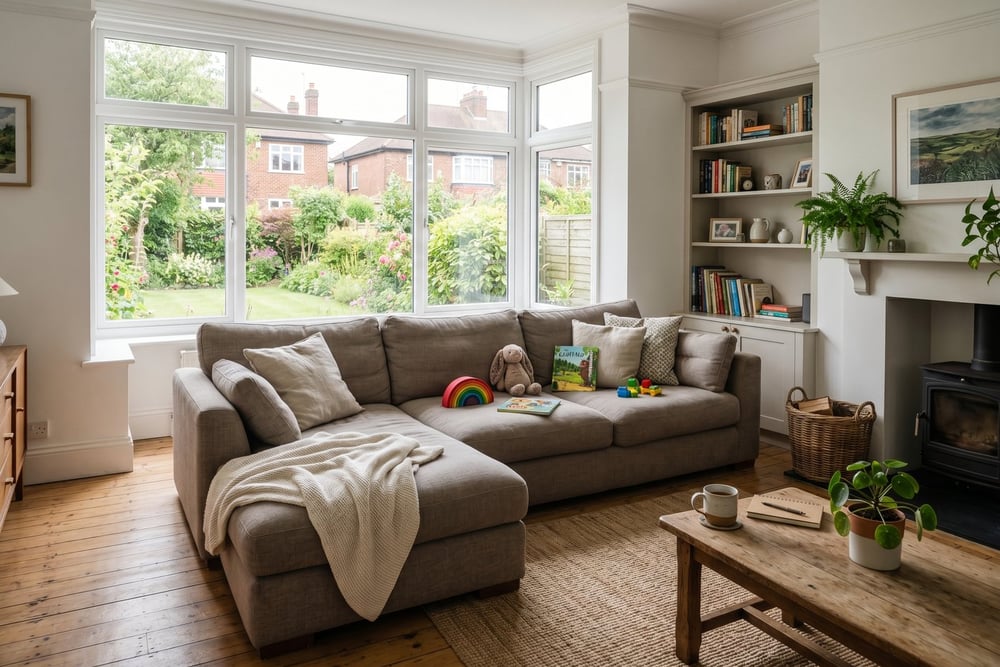
If you rent or move often, a modular sofa goes with you and reshapes to the next room. If you have young children, you can add seats as the family grows or split the sofa for a clear-out. In an open-plan space, a modular sofa can zone the seating away from the kitchen or dining area. In an awkward room with a bay window or chimney breast, build around the features instead of fighting them. See our guide to styling the 2026 living room for how to dress one once it is in.
Modular or fixed sofa: which is better?
A modular sofa wins on flexibility and a fixed sofa wins on price and solidity. The right choice comes down to whether your room will ever change.
A fixed sofa, including a fixed corner sofa, is usually cheaper, feels more solid, and never drifts apart. The trade-off is that you are locked into one shape and one handing. A modular sofa costs a little more, and its sections can shift in use. Look for connector brackets that lock them together. If you know your room and never plan to change it, fixed is the sensible buy. If life is in flux, modular pays for itself. If a fixed shape suits you, see our guide to choosing a corner sofa for a small or awkward room.
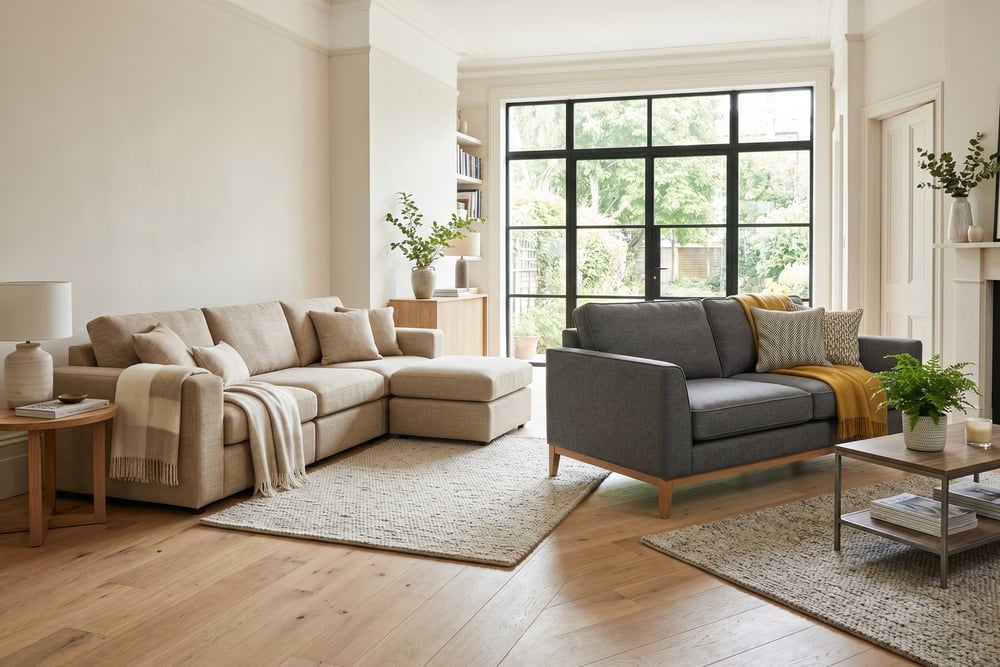
If you want a fixed shape with real presence, the Renee five-seat velvet corner sofa (£3,298) is our statement pick, while the Hanover Grey Linen corner sofa (£2,143) is the calmer everyday choice.
How do you care for a modular sofa?
Care for a modular sofa the same way as any upholstered sofa, with one extra job. Rotate and swap the cushions between sections so they wear evenly.
Vacuum the seats weekly with a soft brush, and deal with spills straight away by blotting, never rubbing. Check the fabric care code before you use any cleaner. Once or twice a year, pull the sections apart and vacuum where they meet. Re-seat the connector brackets so the sofa stays tight. Because you can lift out single sections, a modular sofa is far easier to deep-clean than a fixed one.

Frequently asked questions
What does modular sofa mean?
A modular sofa is built from separate sections that connect. You arrange them into a straight, L, or U shape, then rearrange them whenever the room changes.
What is the difference between a modular and a sectional sofa?
A modular sofa is separate connecting sections you can rearrange. A sectional is one large multi-piece set in a fixed layout. Modular offers more flexibility over time.
Are modular sofas worth it?
Yes, if your space or needs might change. The flexibility pays off when you move, redecorate, or grow a family. A fixed sofa is the better value if your room is settled.
How much space does a modular sofa need?
Allow 90cm to 100cm of depth per seat and 80cm of legroom in front. Measure the wall, the walkway, and your doorways before choosing a layout.
Do modular sofa sections come apart?
Yes, and that is the point. Each section lifts out for cleaning, moving, or rearranging. Connector brackets lock them together so they stay put in daily use.