How to Choose a Corner Sofa for a Small or Awkward Living Room
Written by The Ezzo Team on 23rd Jun 2026.
A corner sofa is the most space-clever seat in the room, but only if it fits. Buy one too big and it blocks the walkway. Buy the wrong handing and it faces the wall instead of the telly. In a small or awkward room, the measuring matters far more than the colour.
We sell corner sofas built for real British living rooms, so this guide covers how to measure, how to choose left or right hand, and which layout suits a small, awkward, or open-plan space.
In short: Measure the room, the doorways, and the route in before you buy a corner sofa. Allow about 90cm to 100cm of depth per seat and leave a 70cm walkway around it. Choose left hand or right hand by where the long part sits as you face the sofa. An L-shape suits small and awkward rooms. A U-shape suits large, open-plan ones.
Key takeaways
- Measure the room, every doorway, and the carry route before you order.
- Allow 90cm to 100cm of depth per seat and an 80cm legroom gap in front.
- Left hand or right hand is decided by the long side as you look at the sofa.
- An L-shape tucks into a corner and suits small or awkward rooms.
- A U-shape needs a large or open-plan room and seats the most people.
- A modular corner sofa can be split and rearranged if your room changes.
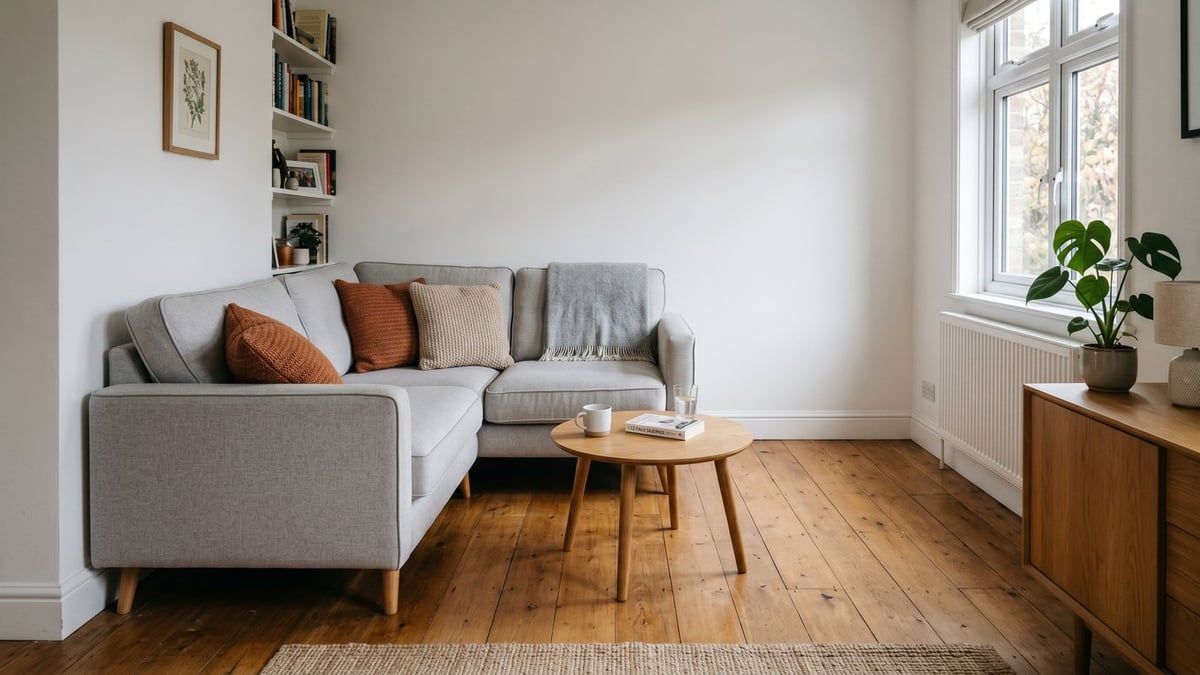
How do you measure for a corner sofa?
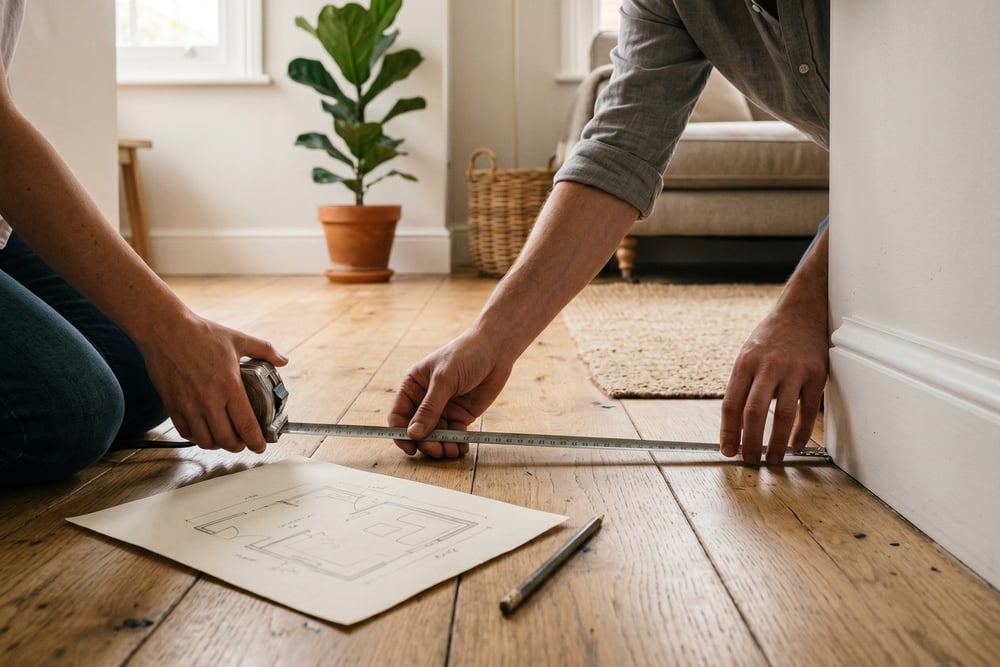
Measure the room first, then the doorways, then the route in. A corner sofa that fits the room is no use if it will not get through the front door.
Start with the two walls the sofa will sit against. Mark each arm of the L on the floor with masking tape. Live with it for a day. Check the depth too, because a corner sofa is deeper than it looks once the cushions are on. Allow about 90cm to 100cm of depth per seat and keep an 80cm gap of clear floor in front for legs and a coffee table. Then measure the tightest doorway, hallway turn, and any stairwell, and compare it to the largest section of the sofa.
What is the difference between a left-hand and a right-hand corner sofa?
Stand in front of the sofa and look at it. If the longer part runs off to your left, it is a left-hand corner sofa. If it runs to your right, it is a right-hand one.
This is the single most returned detail on a corner sofa, so it is worth getting right. Shops sometimes describe handing as you sit on it rather than as you face it, so always check which method the listing uses. Picture where the chaise or long return needs to go in your room, against which wall, then match the handing to that. A modular corner sofa sidesteps the problem, because you can swap the sides over later.
Which corner sofa layout suits a small living room?
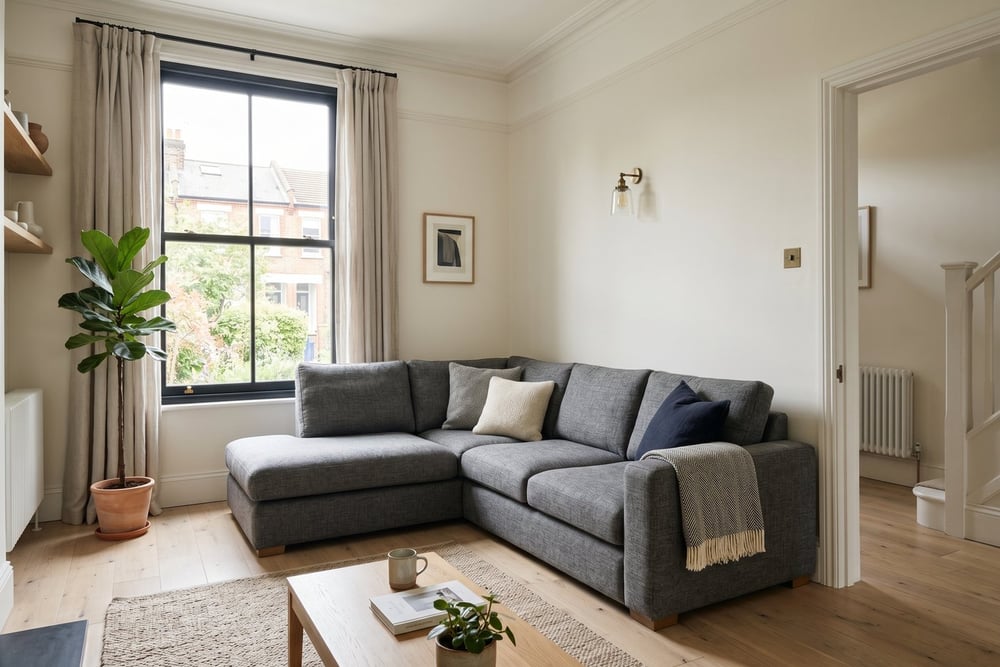
An L-shaped corner sofa suits a small living room best. It uses the corner and two walls, which are usually the dead space, and keeps the centre of the room open.
The trick in a small room is to pick the smallest L that still seats your household, and to keep the return short so it does not block the doorway or the walkway to the window. A compact two-or-three-seat corner with a short chaise often beats a large fixed sofa plus a separate armchair, because it works the corner harder. If you want to keep the floor open, look for a model with a movable ottoman rather than a fixed chaise. For a deeper dive into rearranging seating in a tight space, see our guide to planning and configuring a modular sofa.
How do you fit a corner sofa in an awkward room?
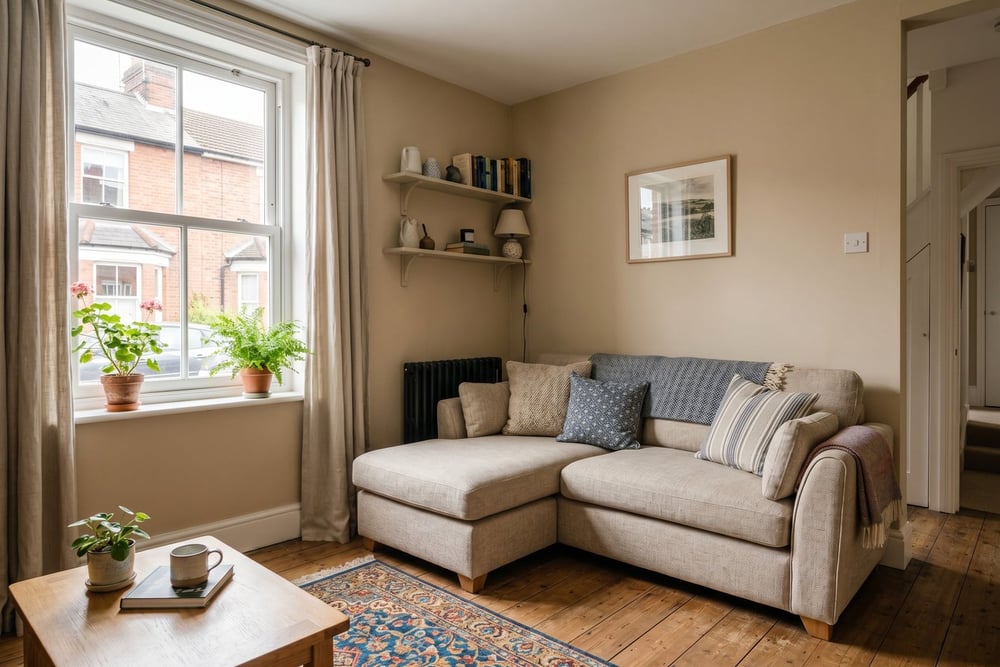
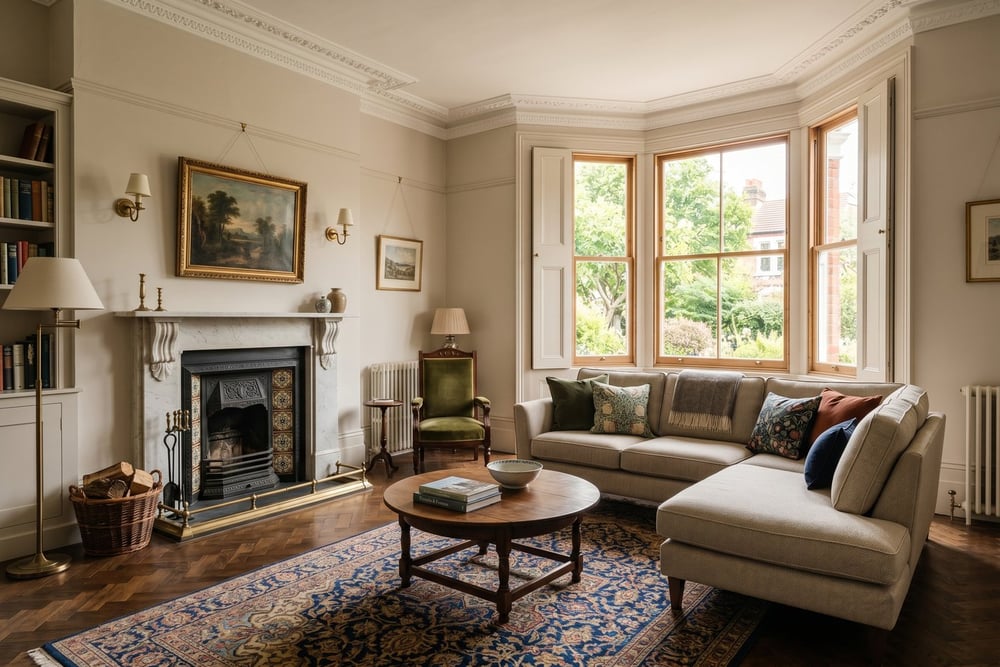
In an awkward room, work around the fixed features first. A bay window, a chimney breast, a radiator, or a door swing all decide where the sofa can and cannot go.
Float the sofa just off the bay rather than jamming it into the curve, and keep the return clear of the chimney breast so the hearth still reads as the focal point. Leave at least 30cm in front of a radiator so it can still heat the room. If two features fight for the same wall, a modular corner sofa earns its money here, because you can shape it to the room instead of forcing a fixed block into a space it was never built for.
L-shape or U-shape: which corner sofa should you choose?
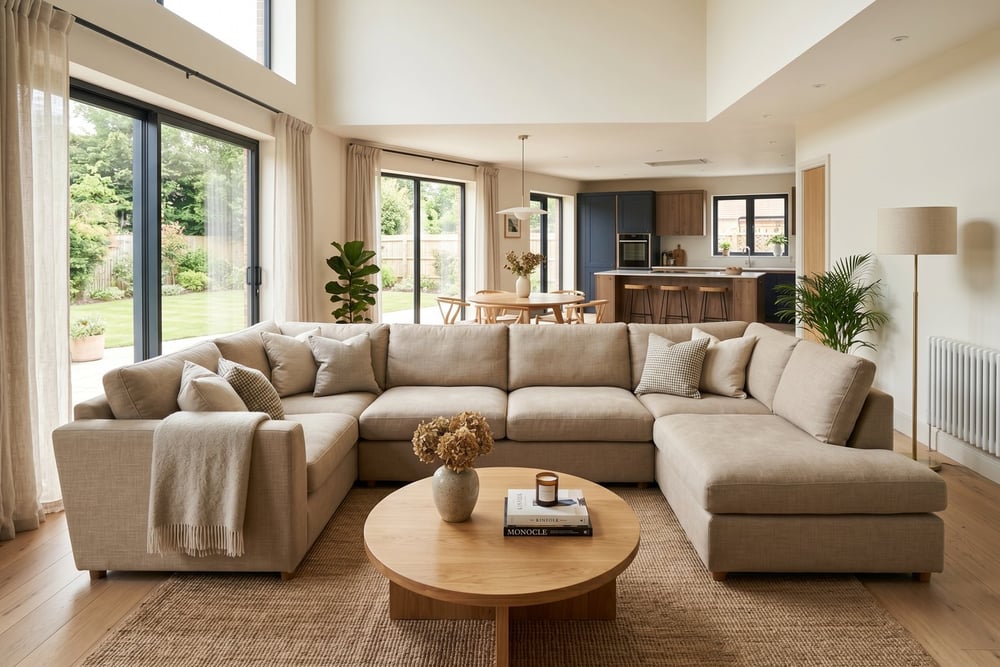
Choose an L-shape for most rooms and a U-shape only for large or open-plan spaces. The U seats more but needs a lot more floor.
An L-shape sits against two walls and is the safe choice for a small or average British living room. A U-shape, with a return on both sides, suits a big family room or a broken-plan space where the sofa can sit away from the walls and define a zone. In an open-plan room, a U-shape can act as a soft divider between the seating and the dining or kitchen area. Pair it with a round table in the dining zone to keep the flow easy, as we cover in our guide to round dining tables for small rooms.
| Layout | Best for | Rough footprint | Watch out for |
|---|---|---|---|
| L-shape (fixed) | Small to average rooms with a clear corner | From about 2.3m x 1.6m | Handing is fixed, so measure left or right carefully |
| L-shape (modular) | Awkward or changing rooms | Flexible, builds to the wall | Sections can drift apart without connector brackets |
| U-shape | Large or open-plan family rooms | From about 2.8m x 2.8m | Too big for most standard living rooms |
| Corner sofa plus ottoman | Small rooms that need flexibility | Compact, ottoman moves | Less of a true corner-lounging shape |
How much does a corner sofa cost?
A corner sofa is a long-term buy, so the price reflects the frame, the filling, and the fabric. Our range runs from a linen-weave family corner to a deep velvet statement piece.
The Hanover Grey Linen Corner Sofa with adjustable headrests is a calm, hard-wearing choice at £2,143, and the same model in a warmer tone, the Hanover Ochre Linen, is £2,391. If you want a real centrepiece, the Renee five-seat velvet corner sofa below is the one we would point you to.
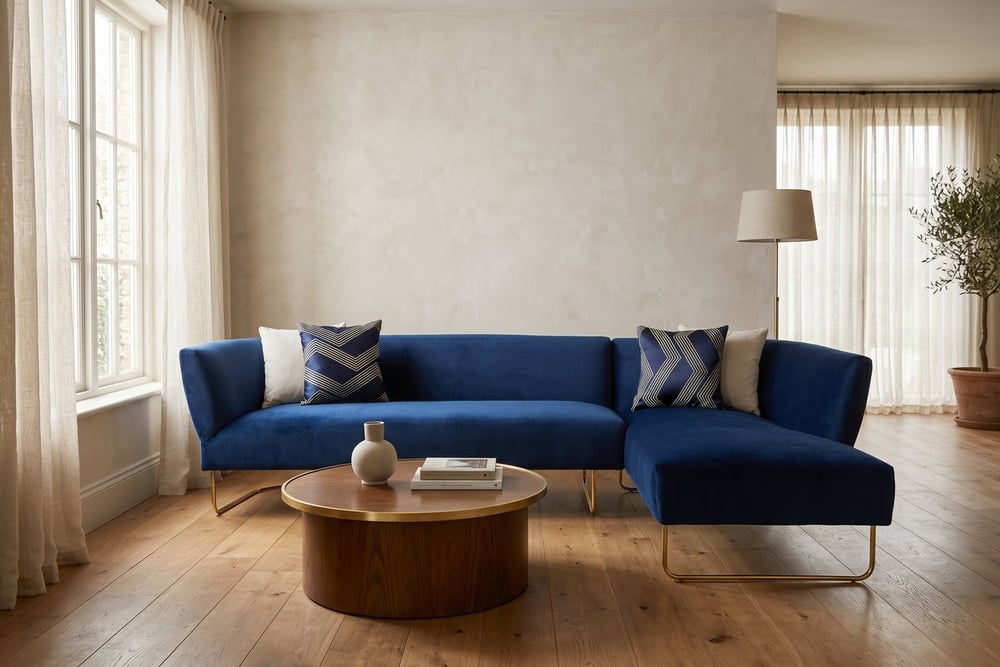
Shop the Renee Velvet Corner Sofa → from £3,298
What corner sofa looks current in 2026?
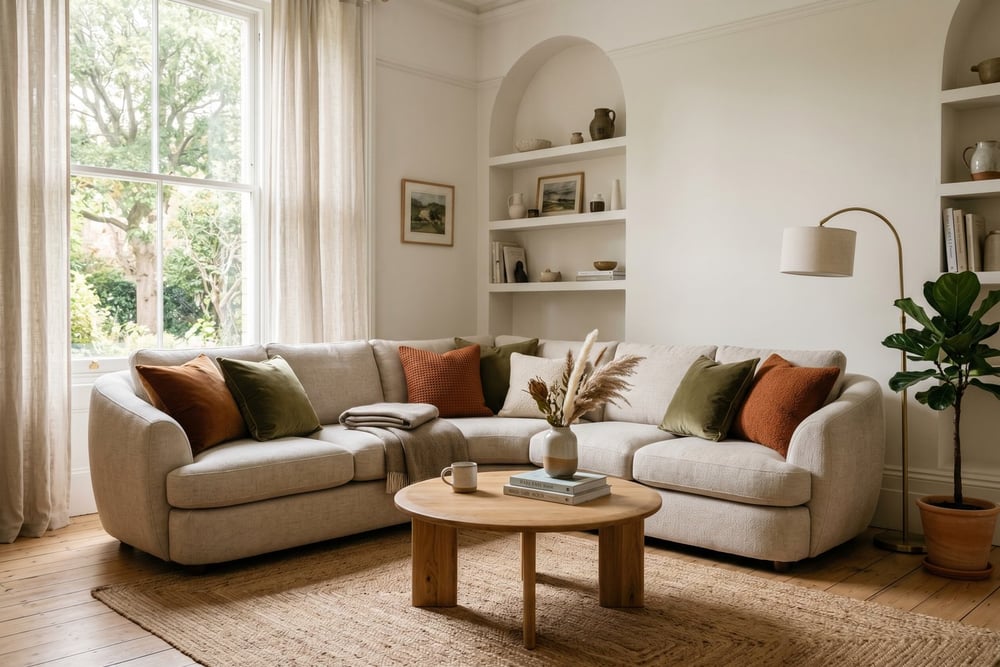
Soft, rounded shapes and warm colours lead 2026. Think deep seats, curved arms, and tones like oatmeal, sand, clay, and deep blue rather than flat grey.
The wider move towards curves and natural textures runs right through living-room furniture this year. A corner sofa in a warm neutral suits the look. Dress it with a couple of olive or rust cushions. Velvet and chunky weaves add the texture the trend calls for. Read our guide to curves and bouclé in the 2026 living room for the full styling picture.
Frequently asked questions
How do I know if I need a left or right-hand corner sofa?
Stand and face the sofa. If the longer part runs to your left, it is left hand. If it runs to your right, it is right hand. Match it to your longest free wall.
What size corner sofa fits a small living room?
A compact L-shape from about 2.3m by 1.6m suits most small rooms. Allow 90cm to 100cm of depth per seat and keep an 80cm gap in front for legs.
Will a corner sofa fit through my door?
Measure the largest section and your tightest doorway before ordering. A modular corner sofa solves tight access, because each section comes apart and carries in separately.
Is a corner sofa good for a small room?
Yes, if you size it right. A corner sofa uses the dead corner and two walls. That keeps the middle open and the seat count high.
L-shape or U-shape for my living room?
Choose an L-shape for a small or average room and a U-shape only for a large or open-plan space. The U seats more but needs far more floor.