Modular Sofas: How to Plan and Configure One in 2026
Written by The Ezzo Team on 4th Jun 2026.
A modular sofa lets you build seating to fit your room, then change it when the room changes. Move house, add a chaise, split it into two. That flexibility is why modular and sectional designs are one of the biggest seating trends of 2026.
We sell modular and corner sofas in several configurations, so this guide covers how they work, how to size one, and the look leading living rooms this year.
In short: A modular sofa is built from separate sections that connect, so you can arrange it as a corner, an L, a U, or a straight run. Measure your room and your doorways before buying. Allow 90cm to 100cm depth per seat. For 2026, choose soft curved sections in warm oatmeal, sand, or clay.
Key takeaways
- Modular means separate sections that connect, so the shape can change later.
- Measure the room, the doorways, and the lift or stairwell before you buy.
- Allow 90cm to 100cm of depth per seat and 80cm of legroom in front.
- Corner and chaise sections eat floor space, so plan the walkway around them.
- Warm neutrals and soft curved arms define the 2026 look.
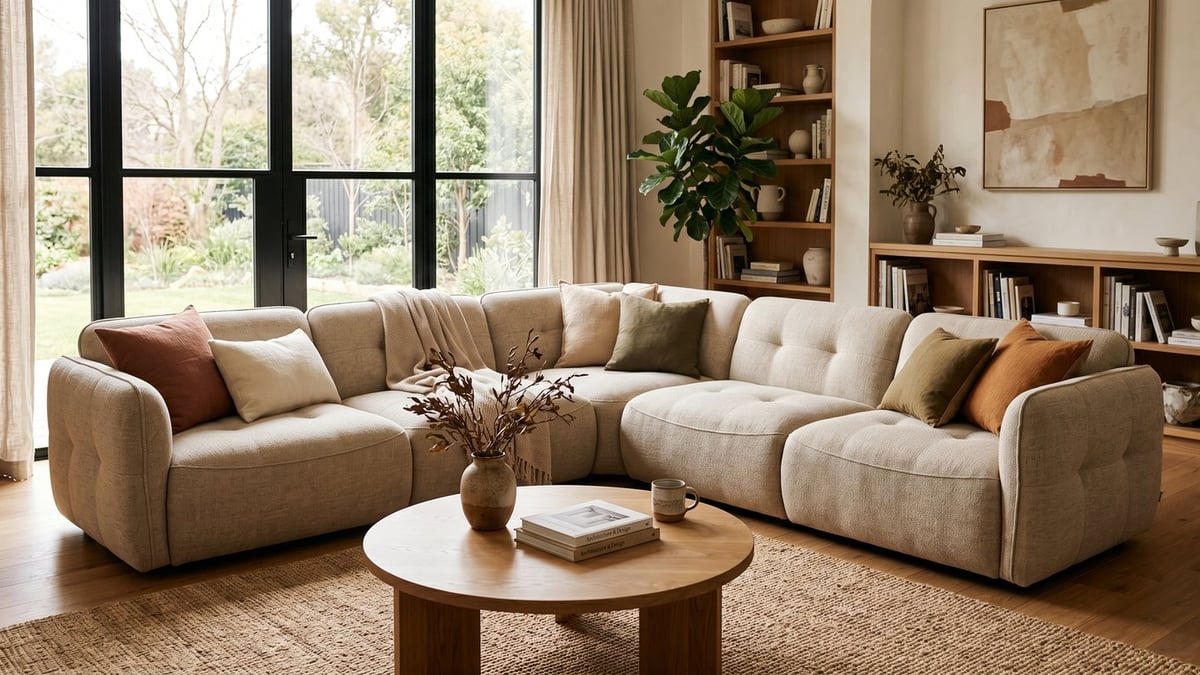
What is a modular sofa?
A modular sofa is made from separate sections that connect together. You can arrange those sections as a corner, an L, a U, or a straight sofa.
Some modular ranges let you buy single seats, corner pieces, and ottomans separately and add to them over time. Others come as a fixed set of modules. A sectional is the same idea sold as one large multi-piece unit. The appeal is the same either way. You shape the seating to the room rather than forcing the room to fit a sofa.
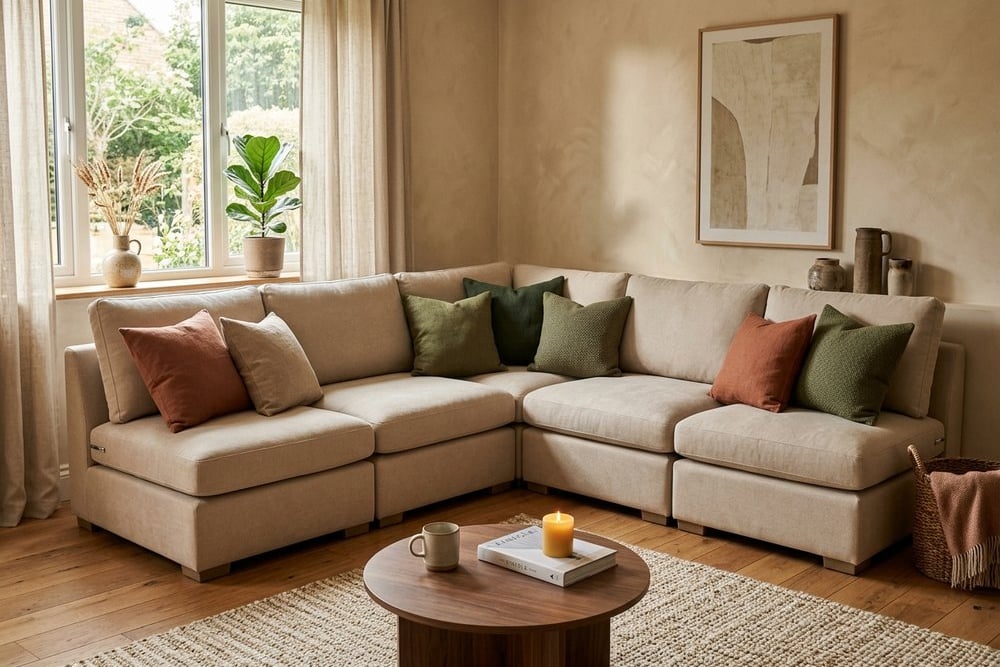
How do you configure a modular sofa?
Configure a modular sofa by starting with where people look, usually the television or the window. Build the seating to face it.
An L-shape suits most rectangular rooms and tucks into a corner. A U-shape suits larger, square rooms and family seating. A straight run with a separate ottoman keeps a smaller room open. Sketch the layout on paper with real measurements first. Leave a walkway of at least 70cm around the arrangement so the room still flows.
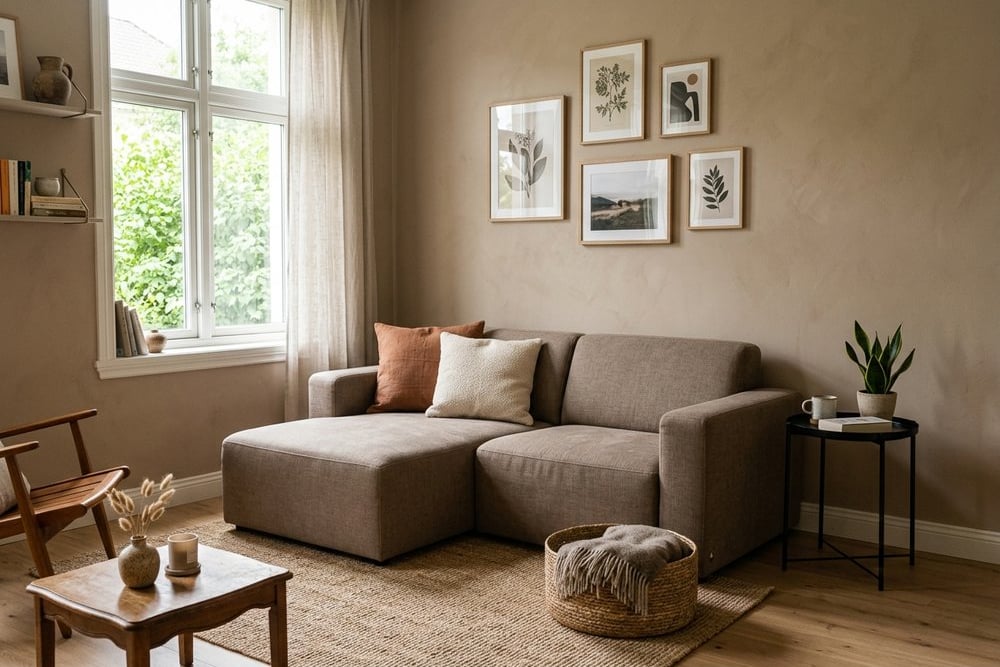
What size modular sofa do you need?
Size a modular sofa by the room first, not the seat count. Measure the wall length, then subtract space for walkways and other furniture.
Allow 90cm to 100cm of depth for each seat and around 80cm of clear legroom in front. A corner section typically needs a square of about 90cm by 90cm. The most common mistake is buying for the showroom, not the doorway. Measure your doorways, hallway, and any lift or stairwell, because a section that will not fit through the door is no use at all.
| Type | Flexibility | Best for | Watch out for |
|---|---|---|---|
| Modular (buy sections) | High, add or rearrange later | Changing needs, awkward rooms | Sections can shift apart in use |
| Sectional (one large set) | Medium, fixed layout | Large family rooms | Hard to move through doorways |
| Corner sofa (fixed) | Low, one shape | Rooms with a clear corner | Locks you into the handing, left or right |
| Sofa plus ottoman | High, move the ottoman | Small rooms | Less of a true lounging shape |
Are modular sofas worth it?
Modular sofas are worth it if your space or needs might change. The flexibility pays off when you move, redecorate, or grow a family.
The trade-off is that sections can drift apart in daily use, so look for ranges with connector brackets that lock them together. A fixed corner sofa is usually cheaper and feels more solid, but you are stuck with one shape and one handing. If you know your room and never plan to change it, fixed can be the better buy.
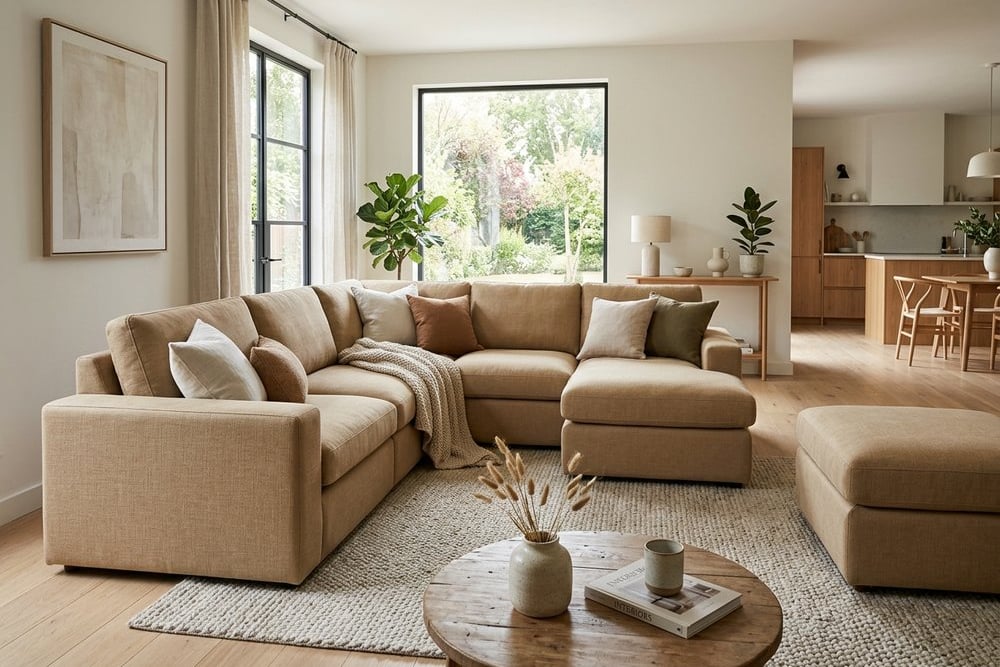
What is the 2026 modular sofa look?
The 2026 look is soft and rounded. Think deep, low sections with curved arms and plump cushions in warm, natural tones.
Colour has warmed up. Oatmeal, sand, and clay have replaced cool grey. Bouclé and chunky weaves add texture, while a few cushions in olive or rust tie the sofa to the wider palette. Pair it with a round coffee table and a jute rug to echo the soft shapes. The mood is relaxed and lived-in rather than sharp and formal.
Frequently asked questions
What is the difference between a modular and a sectional sofa?
A modular sofa is built from separate connecting sections you can rearrange. A sectional is one large multi-piece unit in a fixed layout. Modular offers more flexibility.
Can you move a modular sofa easily?
Yes, that is the main benefit. Each section moves separately, so a modular sofa is far easier to carry, fit through doorways, and rearrange than a fixed sofa.
How much space does a modular sofa need?
Allow 90cm to 100cm of depth per seat and 80cm of legroom in front. Measure the wall, the walkway, and your doorways before choosing a layout.
Do modular sofa sections come apart?
They can shift in daily use. Choose a range with connector brackets that lock the sections together, and they will stay put as one solid sofa.